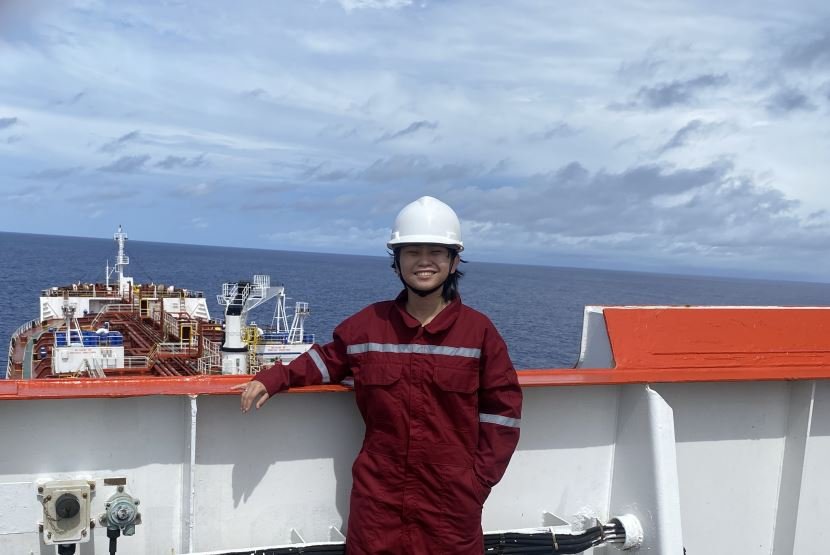
I’m 21 years old, the eldest in my family, and I’m currently somewhere off the coast of Africa aboard an oil tanker, heading towards Fujairah. Three months ago, I’d never set foot on a merchant vessel. Today, I’m the only woman among an all-male Filipino crew, learning to navigate not just the seas, but a career. You could say I have embarked upon a voyage of self-discovery. I’m here for the experience, for the challenge, for the person I’m becoming.
It was my uncle who planted the seed. When he suggested I consider seafaring, something clicked. I’ve always loved travelling, always wanted to see different places. “Why not combine that with work?” he said. The logic was simple: I could explore the world and earn a salary while doing it. At the time, it seemed perfect. I discovered this opportunity through social media. I watched videos, did my research, and took the plunge.
I discovered this opportunity through social media. I watched videos, did my research, and took the plunge.
I spent three years at PMI Colleges in Quezon City studying for this. Those years weren’t easy. There were plenty of challenges along the way. But I muddled through somehow. The irony is that I’ve learnt more in these past three months at sea than I did in three years of formal education. The classroom can only teach you so much; the real lessons come when you’re standing on deck watching the horizon pitch and roll.
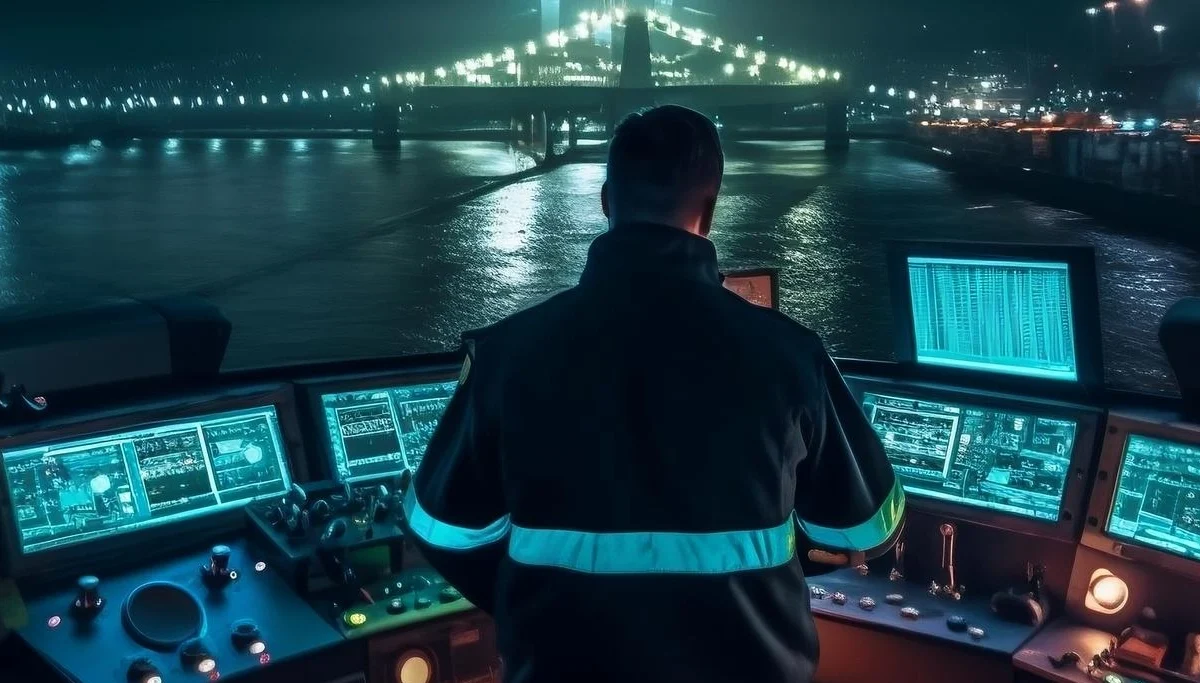
My role is technically cadet, but the captain sees me as the next third mate. That means I’m shadowing the current third mate closely, learning everything he does: checking the GMDSS equipment, maintaining logs, inspecting life-saving apparatus, monitoring navigation errors. It’s relentless. I’m constantly taking notes, asking questions, trying to absorb it all before my brain reaches capacity.
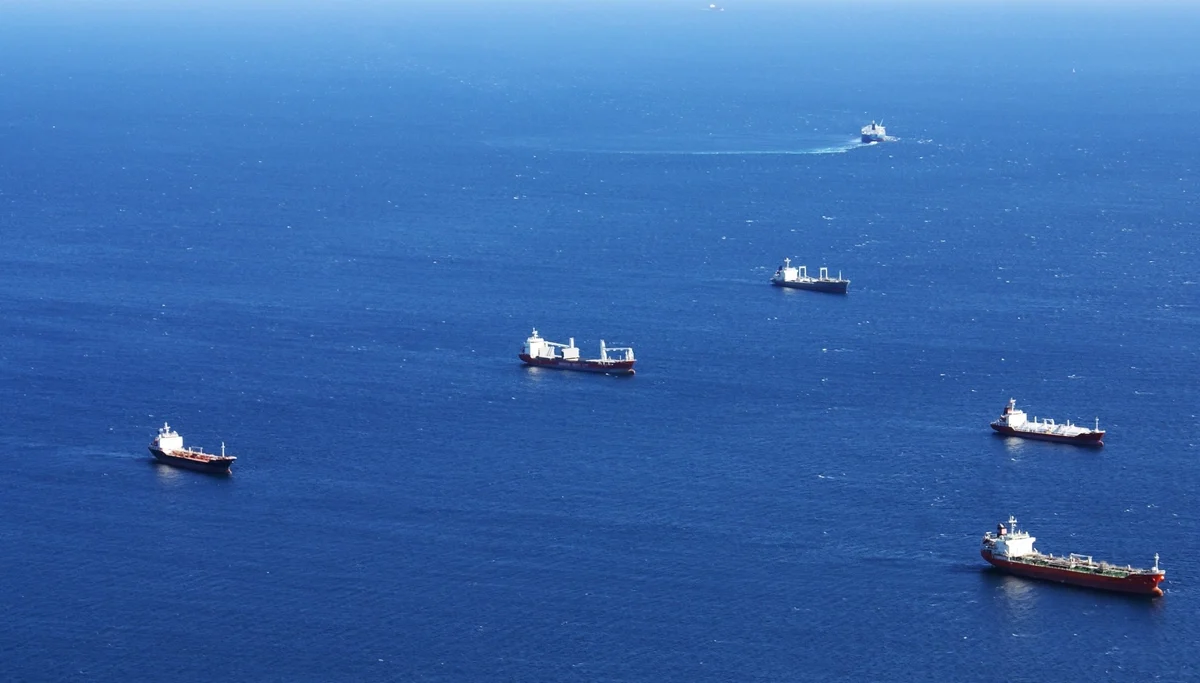
The work itself is demanding. This is a tanker vessel and we carry petroleum products. On our last voyage, we were loaded with gas oil. Right now, we’re sailing in ballast, waiting to load cargo, possibly in Fujairah. The ship is an elderly lady. With careful hands, we keep her seaworthy.
The crew tells me things that were difficult for them when they started, come easily to me
Being the only woman aboard presents its own challenges. At first, I worried about how I’d fit in. This is traditionally men’s work; heavy, physical labour that demands brute strength. But I’ve found my niche. While I may not match the crew in raw muscle power, I excel at the administrative side: the Excel spreadsheets, the drill documentation, the endless paperwork that keeps a vessel compliant. The officers check my work, and so far, I’m holding my own.
I was upfront with the crew from the beginning. I needed them to know who I was, and I needed to establish boundaries early. I’m incredibly fortunate. They’ve been respectful, open-minded and welcoming. They don’t make inappropriate jokes or treat me differently. We’ve found common ground, shared interests that transcend gender. They give me lighter physical tasks when necessary, but they don’t coddle me. It’s a delicate balance, and somehow, we’ve struck it.
We’re an entirely Filipino crew, which creates a certain camaraderie, but also means we’re all far from home. So far, we’ve sailed primarily between Africa, Brazil and Dubai. We’re heading to China for the first time on this voyage, and if the captain permits, I’d love to explore.
I’m learning, and I’m discovering reserves of strength I didn’t know I possessed.
Still, I won’t sugar-coat things. There are moments of profound isolation. It’s genuinely tough in ways I hadn’t anticipated. The work is exhausting, both physically and mentally. And soon we’ll be passing through waters near the Red Sea, skirting conflict zones. The captain and officers assure us we’ll keep well clear of piracy hotspots, but I’d be lying if I said I wasn’t frightened.
If I were to sum up this experience in three words, I’d say: fun, tiring and tough. My biggest achievement so far has been how quickly I’ve absorbed the work. The crew tells me things that were difficult for them when they started, come easily to me. Perhaps I’m a natural, or perhaps I’ve simply been blessed with patient teachers.
Looking ahead, my ambition is clear: I want to become a qualified officer. Within five years, I’d like to be working as a ship’s officer while also teaching, perhaps as a maritime professor when I’m on leave. I want to give back, to help shape the next generation of seafarers.
Would I recommend this career to other women? Only if they possess what I call “the heart of a man”. I don’t mean that in a gendered kind of way; rather in terms of mental toughness and resilience. If you’re easily offended, if you need constant comfort, if you can’t handle crude humour or harsh conditions, this isn’t the life for you. But if you’re strong-minded, adaptable, and genuinely passionate about the work, then absolutely. Gender shouldn’t be a barrier, though it will certainly be tested.
I’m still finding my sea legs, both literally and figuratively. I’m learning, and I’m discovering reserves of strength I didn’t know I possessed.
The waves keep coming, the ship keeps moving, and I keep climbing up and down the vessel stairs. And somehow, perhaps improbably, I’m exactly where I need to be.
M.A. Diesellynn Flores is currently serving as a deck cadet aboard an oil tanker in the Indian Ocean. This is her first professional maritime posting.